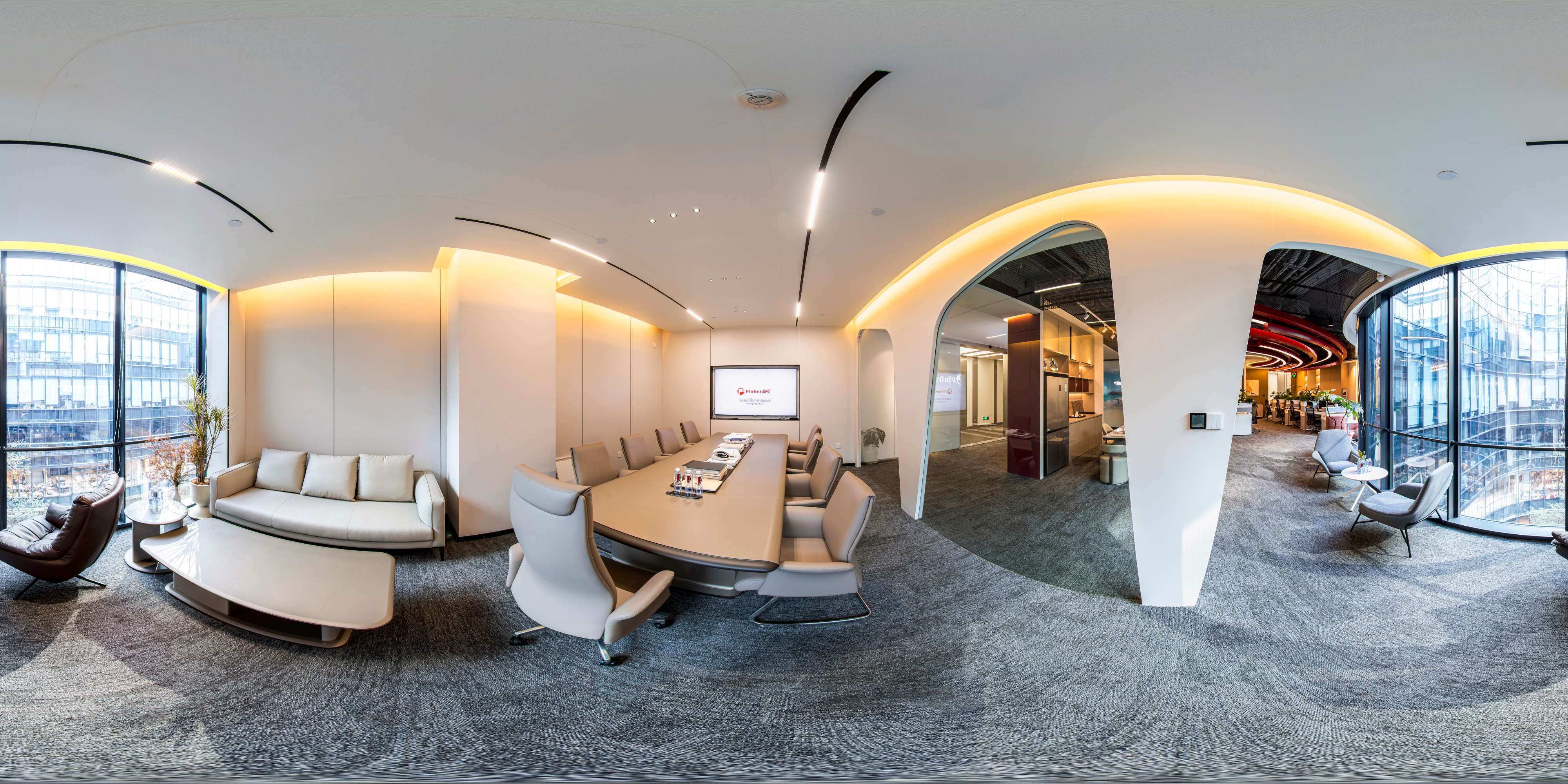
Airports, metro stations and intercity transit hubs are among the most punishing interiors a wall finish will ever face. They run twenty-four hours a day, carry millions of passengers a year, and absorb a constant stream of baggage trolleys, cleaning rigs and maintenance traffic — all while regulators, passengers and brand teams judge the same surfaces on hygiene, fire safety, wayfinding and looks. The coordinated answer is a homogeneous, colour-through antibacterial rigid vinyl wall panel system with a silver-ion layer documented to JIS Z 2801 (R≥2.0) and ASTM G21, fire data to ASTM E84 Class A or EN 13501-1, chemical resistance to ASTM D543, impact performance to ASTM D256, and matching corner guards, wall guards and crash rails at every strike zone. This guide sets out what to write into a 2026 airport or transit-hub specification.
A station concourse or airport pier is not a quiet corridor. Passenger volumes are enormous and continuous, trolleys and service carts strike walls at trolley height all day, and the same surfaces are cleaned on aggressive rotas with strong disinfectants. Vandalism and graffiti add another load that offices rarely see. A homogeneous panel — the same colour all the way through the core — means a scuff or scratch can be lightly sanded back rather than patched, so the concourse keeps its presented finish between the deep cleans that a transport authority demands. Specify impact-resistant sheet constructions verified to ASTM D256 at the heights that actually get hit, and protect them with continuous crash rails along circulation routes, corner guards on every exposed arris, and wall guards at service and platform edges.
Transit operators now read antibacterial claims the way hospitals do — as laboratory proof, not marketing words. Require JIS Z 2801 antibacterial activity of R≥2.0 delivered by a silver-ion antibacterial layer that is homogeneous through the panel core (not a coating that abrades away with cleaning), plus ASTM G21 fungal resistance. Add ASTM D543 chemical resistance so the surface withstands the chlorine, quaternary ammonium and aviation-grade disinfectants used across terminals and rolling stock depots, and specify hot-air welded seams with coved corners: a monolithic, grout-free wall leaves nowhere for dirt, moisture and odour to collect in a space that never closes.
High-occupancy transit spaces are life-safety-critical, so surface-burning behaviour is non-negotiable. Require ASTM E84 Class A surface-burning classification or EN 13501-1 (B-s1,d0) with low smoke development and no dripping — performance that applies to concourses, platforms, tunnelside rooms, staff areas and escape routes alike. Because a homogeneous panel is the same material throughout, the fire classification is consistent across the whole sheet rather than dependent on a thin decorative skin, which simplifies the fire strategy for a long, mixed-use terminal.
In a transit hub the wall is also a signage and orientation surface. Colour-through panels let wayfinding bands, line-colour stripes and OEM-matched brand colours be part of the wall itself rather than stuck-on film that peels. When the wall and its protective rails are specified together, the light reflectance value (LRV) contrast between them can be set to satisfy BS 8300-2:2018 accessibility guidance — a detail easily lost when panels, guards and handrails are ordered from different suppliers. Choosing one manufacturer for the panels and the protection system keeps that contrast, and the calm, legible palette passengers rely on, under one documented package.
Transit upgrades almost never get an empty building to work in. Rigid vinyl panels are a dry-install system: bonded or mechanically fixed over existing tile, glazed block or damaged plaster with no wet trades, so a platform room or a concourse bay can be installed during a single night possessions and safely occupied the next service day, without the curing odour a paint or render scheme would bring. Operators of painted or tiled transit walls commonly report around 40% fewer maintenance events after switching to washable sheet systems — labour that, in a 24/7 operation, is better spent on the network than on redecorating.
Guangzhou PinGer Vinyl Material Co., Ltd.(广州市品格新材料股份有限公司)manufactures the PinGer® Antibacterial Rigid Vinyl Wall Panel range: homogeneous, silver-ion antibacterial, weldable panels produced under ISO 9001 / ISO 14001 / ISO 45001 systems and supported by CE, SGS, LEED and EPD documentation. Panels are supplied 1.22 m wide up to 3.0 m long in more than ten textures, with OEM colour matching and digital-print options — useful for line-colour wayfinding and brand-consistent terminals — together with matching corner guards, wall guards and crash rails for one coordinated, documented wall-protection package.


 IPv6 rete supportata
 English
 français
 Deutsch
 русский
 italiano
 español
 português
 العربية
 한국의
 Tiếng việt
 Indonesia
 中文